
Apple trees are known for their intensely sweet flavour and delicate texture, Apples are widely regarded as some of the finest dessert plums available. While they are not always the easiest fruit trees to manage, careful attention to a few key principles can make them productive and rewarding additions to British gardens.
Unlike some modern fruit crops bred primarily for commercial durability, apple trees are valued for flavour above all else. Their subtle perfume and honeyed taste have made them favourites for generations of gardeners and growers. However, the qualities that make them exceptional also mean they benefit from thoughtful cultivation. Soil conditions, pruning style, and fruit management all influence the eventual harvest.
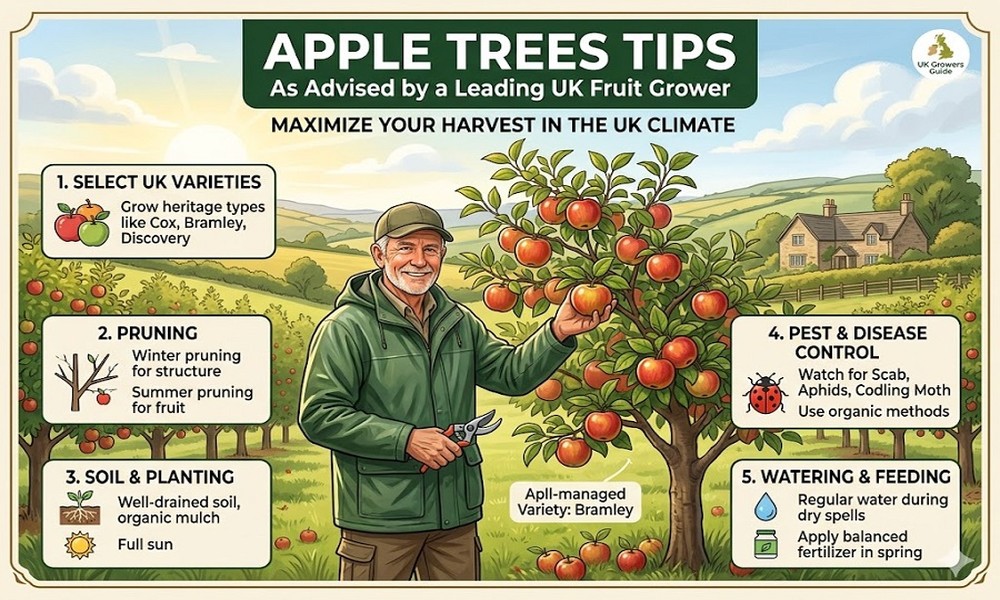
For gardeners considering planting one, it is important to begin with well-chosen trees and reliable guidance. The fruit trees specialists at ChrisBowers note that gardeners searching for apple trees for sale should pay particular attention to rootstock choice and site preparation. They advise that Apples perform best in sheltered positions with good sunlight and well-drained soil, as these conditions encourage strong flowering and improve fruit sweetness.
Understanding a few proven practices used by experienced fruit growers can make the difference between a tree that struggles and one that produces excellent crops for decades. The following three tips reflect widely recommended methods used by professional growers and knowledgeable gardeners throughout Britain.
What Makes apple trees Unique
Apple trees belong to the plum family but differ significantly from the common culinary or dessert plums found in most supermarkets. Their fruit is typically smaller, often green or yellowish even when ripe, and possesses a flavour that is noticeably richer and more aromatic. Classic varieties such as the renowned Green Apple have long been associated with historic orchards and kitchen gardens across England.
One reason Apples have maintained a devoted following among gardeners is their exceptional taste. While many modern plums are bred for firmness and transportability, Apples prioritise sweetness and depth of flavour. This means they often ripen softer and require gentle handling, which partly explains why they are less frequently grown on a large commercial scale.
From a gardening perspective, apple trees behave similarly to plum trees but tend to be slightly more particular about growing conditions. They prefer a warm, sheltered location where spring blossoms are protected from cold winds and late frosts. Because flowering often occurs relatively early in the season, exposure to harsh weather can reduce pollination and therefore crop size.
Pollination compatibility is another important factor. Some Apple varieties are self-fertile, meaning they can produce fruit without another compatible tree nearby. Others benefit greatly from cross-pollination. Gardeners who want reliable yields often plant more than one variety or select trees known to pollinate well together.
Soil preparation also plays a significant role in long-term tree health. apple trees favour fertile soil that retains moisture while draining well. Heavy clay can sometimes be improved by incorporating organic matter such as compost or well-rotted manure. Likewise, very sandy soils benefit from organic material that helps retain nutrients and moisture.
Once established, apple trees are generally hardy in the UK climate. However, the key to success lies not simply in planting them but in managing their growth thoughtfully. Experienced growers often emphasise three areas where attention brings the greatest rewards: correct pruning, careful fruit thinning, and maintaining overall tree health through soil management.
Tip One: Prune with a Light and Timely Approach
Pruning is often the area where gardeners feel most uncertain, particularly when dealing with stone fruits such as Apples. The principles are simpler than they may initially appear, but timing and restraint are crucial.
Unlike apples and pears, which are typically pruned in winter, apple trees should generally be pruned during the growing season. Late spring or early summer is usually the preferred period. This reduces the risk of silver leaf disease, a fungal infection that can enter through pruning wounds during colder months.
The aim of pruning is not to drastically reshape the tree but to maintain an open structure that allows sunlight and air to reach all parts of the canopy. Apples naturally produce vigorous shoots, and without occasional thinning, the branches can become crowded. Dense growth can limit fruit quality because sunlight is essential for developing sweetness.
A well-structured Apple tree typically has a balanced framework of main branches spreading outward from the trunk. Within this structure, new shoots should be spaced so they do not rub or compete excessively. Removing a few poorly positioned shoots each year helps maintain this balance.
One common mistake is over-pruning young trees. Heavy pruning encourages strong vegetative growth at the expense of fruiting. Instead, early pruning should focus on shaping the tree gradually, guiding branches outward and preventing overcrowding rather than removing large portions of growth.
As trees mature, pruning becomes even lighter. The goal shifts toward removing damaged wood, thinning overly dense sections, and controlling excessive height if necessary. By maintaining a calm, methodical approach, gardeners can keep their trees productive without stimulating unnecessary growth.
Another advantage of summer pruning is that it allows gardeners to see how the tree behaves during the growing season. Leaves, shoots, and developing fruit all provide clues about how the tree is distributing energy. Adjustments can therefore be made more precisely.
Over time, a lightly pruned Apple tree develops a balanced shape that supports consistent cropping. Sunlight penetrates the canopy, air circulation improves, and fruit has space to mature properly.
Tip Two: Thin the Fruit for Better Harvests
One of the most valuable but frequently overlooked practices in Apple cultivation is fruit thinning. Many gardeners are initially reluctant to remove developing fruit, especially when trees appear to be producing abundantly. However, thinning can significantly improve both fruit quality and tree health.
Apple trees, like many plums, can sometimes set more fruit than they can realistically mature. When this happens, the result is often a large number of small fruits with reduced flavour. Heavy cropping can also strain branches and lead to inconsistent yields in future years.
Thinning addresses these issues by reducing competition among developing fruits. When excess fruit is removed early in the season, the remaining ones receive more nutrients, water, and sunlight. The result is typically larger fruit with superior sweetness.
The process usually begins once the natural “June drop” has occurred. During this stage, the tree naturally sheds some fruitlets. Afterward, gardeners can assess how heavily the branches are still loaded.
Ideally, fruits should be spaced so they do not touch when fully grown. This often means leaving one fruit every few centimetres along the branch. While it may seem drastic at first, experienced growers recognise that a smaller number of well-developed fruits produces a far better harvest overall.
Another benefit of thinning is reduced risk of branch damage. apple trees can produce clusters of fruit that become surprisingly heavy as they ripen. Removing some fruit early prevents branches from bending excessively or breaking during late summer.
Consistent thinning also helps regulate cropping patterns. Trees that carry extremely heavy crops one year sometimes produce very little the following year. By moderating the load each season, gardeners can encourage steadier harvests over time.
For gardeners browsing apple trees for sale, understanding the importance of fruit thinning can influence variety choice as well. Some varieties are naturally more prolific and therefore require more attention in this area, while others produce moderate crops that are easier to manage.
Ultimately, thinning is less about reducing yield and more about improving the quality of what remains.
Tip Three: Build Long-Term Soil Health
The foundation of any successful fruit tree is the soil in which it grows. While apple trees are relatively adaptable, they perform best when soil conditions support steady growth and nutrient availability.
In many British gardens, soil improvement begins with organic matter. Compost, leaf mould, and well-rotted manure all contribute to healthier soil structure. These materials improve moisture retention, encourage beneficial microorganisms, and gradually release nutrients that trees can absorb.
Mulching is particularly useful for Apple trees. A layer of organic mulch applied around the base of the tree helps conserve moisture during dry periods and suppresses competing weeds. It also slowly enriches the soil as it decomposes.
When applying mulch, it is important to leave a small gap around the trunk to prevent moisture from accumulating against the bark. This simple precaution reduces the risk of disease and encourages stronger trunk development.
Feeding can also support healthy growth, particularly in soils that are naturally low in nutrients. Balanced fertilisers formulated for fruit trees can be applied in early spring to encourage flowering and fruit set. However, excessive nitrogen should be avoided, as it promotes leafy growth at the expense of fruit production.
Water management is another key aspect of soil care. While established apple trees tolerate moderate dryness, young trees benefit from consistent watering during their first few seasons. Adequate moisture supports root development and reduces stress during warm periods.
Gardeners who invest time in improving soil conditions often notice benefits beyond tree health. Better soil structure leads to stronger root systems, which in turn support more stable growth and improved fruit quality.
Healthy soil also helps trees resist pests and diseases. Well-nourished trees are generally more resilient and recover more quickly from environmental stress.
Over the years, maintaining soil health becomes less about dramatic interventions and more about steady, thoughtful care. Regular mulching, occasional feeding, and attention to moisture levels provide the stable environment that apple trees require to thrive.
The Lasting Appeal of apple trees in British Gardens
Despite the increasing popularity of modern fruit varieties, apple trees continue to attract gardeners who value traditional flavour and orchard heritage. Their fruit may be smaller and more delicate than many supermarket plums, but their taste remains unmatched by most alternatives.
Part of their enduring appeal lies in the connection they create with older gardening traditions. Many historic orchards across Britain once contained Apple trees, and the varieties grown today often trace their origins back centuries. Planting one in a garden today continues that lineage.
Apple trees also reward patience. Unlike fast-growing annual crops, they develop slowly and gradually become more productive as they mature. A well-established tree can produce excellent fruit for decades, providing a seasonal harvest that becomes part of the rhythm of the garden year.
For gardeners interested in expanding their fruit collection, Apples offer an opportunity to grow something slightly different from the more common apples and pears. Their distinctive flavour makes them particularly suited to fresh eating, preserves, and traditional desserts.
Success ultimately depends on understanding their needs. A sheltered site, careful pruning, thoughtful fruit thinning, and healthy soil together create the conditions that allow apple trees to flourish. When these fundamentals are respected, the reward is a harvest of fruit that many gardeners consider among the finest produced in a home orchard.
With attention to these three practical tips, growers across Britain can enjoy the distinctive character of apple trees and ensure they remain a valued feature of gardens for generations to come.