
Knowing when to sell a property is often more important than knowing what to buy. In Singapore’s real estate market, many investors hold good properties too long—or exit too early—missing out on a significant portion of potential gains.
A well-timed exit can improve total returns by 10–30% over the holding period. This is why experienced investors watch exit timing signals, not just market prices.
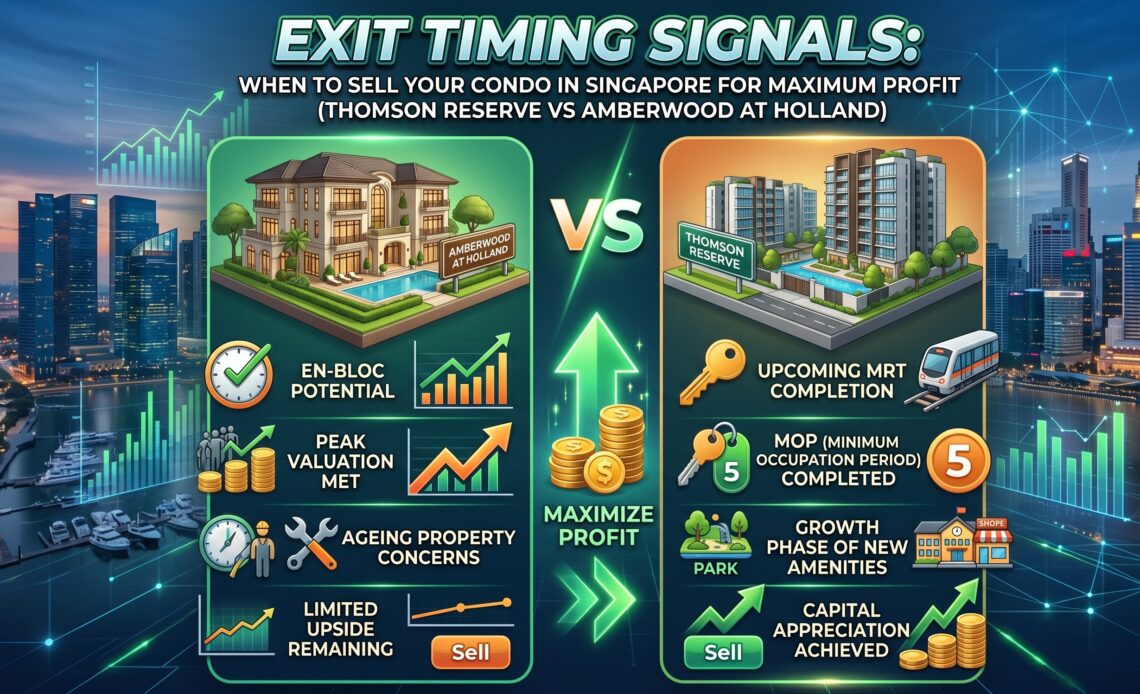
Developments like Thomson Reserve and Amberwood at Holland help illustrate how different property types generate different selling signals over time.
1. Price Growth Deceleration (The First Warning Signal)
One of the earliest exit indicators is slowing price growth.
This doesn’t mean prices are falling—it means:
- Recent transactions show smaller increases
- Price resistance starts appearing
- Sellers take longer to close deals
When growth slows consistently, it often signals that demand is stabilizing.
- In lifestyle-driven areas like Amberwood at Holland, price spikes may happen faster, but they can also flatten once demand normalizes
- In stable residential zones like Thomson Reserve, price growth tends to be steady but may plateau over longer cycles
This slowdown is often the first sign to reassess holding strategy.
2. Increasing Listing Inventory Nearby
Another strong signal is rising supply in the resale market.
When more units are listed:
- Buyers gain more negotiation power
- Sellers compete for attention
- Time-on-market increases
Even without new launches, increased resale listings can pressure pricing.
Investors monitoring Amberwood at Holland may see faster shifts due to lifestyle-driven trading activity, while Thomson Reserve tends to experience slower inventory changes but longer absorption cycles.
3. Rental Yield Compression
Rental performance is a powerful exit indicator.
Watch for:
- Rent stagnation despite rising costs
- Increasing vacancy periods
- More tenant negotiation pressure
When rental yields stop improving, holding becomes less attractive.
For example:
- Amberwood at Holland may experience strong rental demand cycles but also faster corrections when expat demand shifts
- Thomson Reserve tends to maintain stable tenants, but rental growth may plateau earlier due to lower volatility
Yield compression reduces long-term holding advantage.
4. Buyer Demographic Shift
One of the most overlooked exit signals is changing buyer composition.
Over time:
- Certain buyer groups become less active
- New buyer segments dominate demand
- Preferences shift toward newer developments
If your property no longer matches dominant buyer preferences, resale becomes slower.
- Lifestyle-focused demand in Amberwood at Holland may shift with expat cycles or urban preference changes
- Stability-driven demand in Thomson Reserve remains consistent but may not attract aggressive price competition
Understanding who is buying helps determine when to sell.
5. New Launch Competition Effect
New developments nearby can significantly impact resale value.
When new launches appear:
- Older units lose “newness advantage”
- Buyers shift attention to incentives and modern features
- Resale pricing must adjust to compete
Even strong projects feel pressure when surrounded by newer offerings.
This is especially relevant in lifestyle districts like Amberwood at Holland, where boutique launches can quickly shift buyer attention. Stable residential areas like Thomson Reserve are less sensitive but still affected over time.
6. Time-to-Sell Expansion
A key exit metric is how long it takes to sell a unit.
Warning signs include:
- Listings staying active longer
- More price reductions required
- Increased buyer negotiation pressure
When liquidity slows, holding costs increase even if prices remain stable.
This is a hidden drag on returns that many investors overlook until they attempt to exit.
7. Interest Rate Turning Points
Interest rates directly affect buyer affordability.
Exit opportunities often improve when:
- Rates are low or falling
- Loan approvals become easier
- Buyer confidence increases
Conversely, rising rates can delay exits or force price adjustments.
- Amberwood at Holland may react faster to liquidity changes due to its investor and expat base
- Thomson Reserve tends to respond more gradually due to owner-occupier stability
Timing exits around rate cycles can significantly impact profitability.
8. Renovation and Aging Gap
As properties age:
- Maintenance expectations increase
- Newer condos set higher design standards
- Buyers compare older vs newer features more critically
When renovation costs rise but resale premiums do not, holding becomes less efficient.
This gap widens over time and can signal an optimal exit window before perception declines further.
9. Market Sentiment Shift Indicators
Sentiment changes often appear before price changes.
Look for:
- Increased media attention on new launches
- Buyers shifting interest away from resale market
- Slower viewing activity for older developments
When sentiment moves toward new supply, resale demand typically weakens shortly after.
10. Opportunity Peak Identification
The strongest exit signal is recognizing a peak opportunity window.
This occurs when:
- Prices are strong
- Demand is still healthy
- But early signs of slowdown are visible
Selling during this phase often produces optimal returns.
It requires balancing confidence with caution—waiting too long often reduces gains.
Final Thoughts
Exit timing is one of the most underrated skills in property investing. Many investors focus heavily on buying but fail to actively monitor when conditions are ideal for selling.
Thomson Reserve and Amberwood at Holland show two different exit profiles—one driven by stability and gradual cycles, the other influenced by lifestyle demand shifts and faster market sentiment changes.
The key lesson is simple:
You don’t maximize property returns by holding forever—you maximize them by exiting when signals quietly tell you the cycle is changing.