
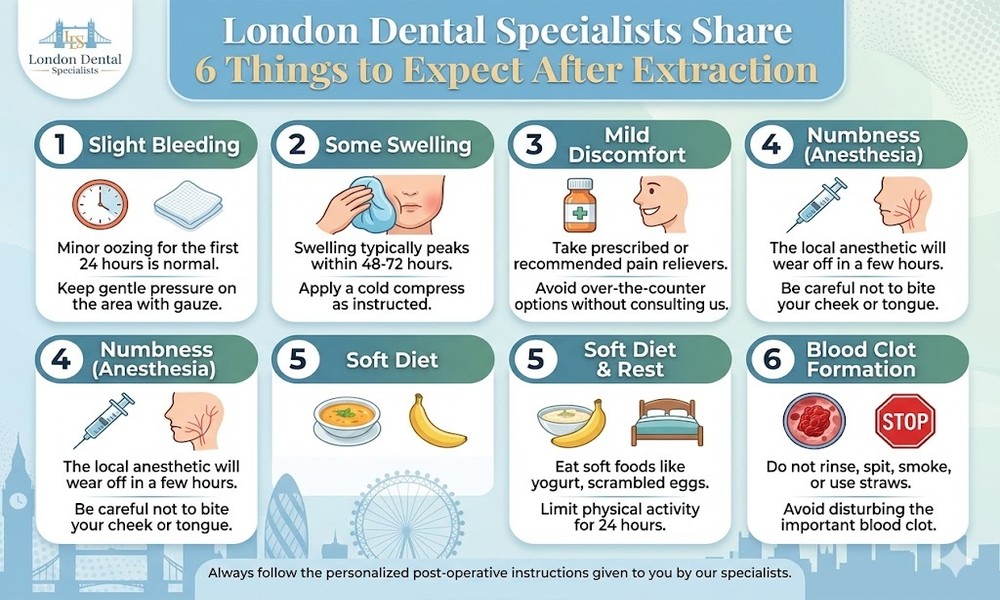
A tooth extraction is often described as a straightforward treatment, but the hours and days that follow usually matter more to patients than the appointment itself. Once the numbness wears off, people tend to focus on practical concerns: how much discomfort is normal, when they can eat properly again, whether swelling will show, and how long healing will take before life feels routine. A good extraction aftercare plan reduces avoidable problems, lowers anxiety, and helps patients judge what is normal and what needs attention from a dentist.
A cosmetic dentist from https://marylebonesmileclinic.co.uk/ advises that patients preparing for tooth extraction London should think beyond the appointment itself and plan for the first forty-eight hours, as this is usually when bleeding control, swelling, eating, and rest have the greatest effect on comfort and healing. That advice is particularly relevant in a city where many people expect to return quickly to meetings, trains, and daily commitments without much pause. Having soft food ready, following instructions carefully, and avoiding common mistakes such as rinsing too early can make recovery feel far more manageable.
The first thing to understand is that extraction recovery is not identical for everyone. A simple removal of a loose or badly damaged tooth may heal with relatively little disruption, while a surgical extraction, an impacted tooth, or a case involving infection may bring more noticeable swelling and tenderness. Smoking status, age, oral hygiene, medical conditions, stress, and even sleep can all influence the pace of healing. London patients often compare their recovery with online stories or a friend’s experience, but that can be misleading. What matters is whether the site is improving steadily. Most recoveries follow a recognisable pattern, and knowing that pattern helps patients respond calmly rather than assuming the worst at the first sign of pain or puffiness.
Some bleeding and clot formation are normal in the first hours
The immediate priority after an extraction is for a blood clot to form over the socket. This clot protects the bone and nerves underneath and acts as the foundation for healing. During the first few hours, a small amount of bleeding or pink-tinged saliva is usually normal, even if it looks more dramatic than it really is. Patients are often surprised by how much a little blood seems to spread in the mouth. Biting on gauze as instructed, keeping the head elevated, and resisting the urge to spit repeatedly are simple steps that support clot formation. Heavy bleeding that does not ease after firm pressure is less typical and should be checked, but light oozing at the start is not usually a sign that something has gone wrong.
The main risk in this early stage is dislodging the clot through avoidable habits. Vigorous rinsing, using a straw, smoking, intense exercise, or constantly checking the socket with the tongue can all interfere with the site just when it needs to settle. In a fast-moving city, it is common for people to leave the clinic and head straight back into errands or work calls, but recovery rarely benefits from that pace. The first day should be treated as protected time. A soft diet, reduced activity, and careful attention to the dentist’s instructions will usually do more for comfort than any last-minute online tip. For patients searching for reassurance after tooth extraction London appointments, this early phase is often the most unsettling, yet it is also the most predictable when aftercare is followed properly.
Swelling, stiffness, and tenderness usually peak before they improve
Many patients expect recovery to feel better with every passing hour. In reality, swelling and discomfort often increase before they settle, especially during the first twenty-four to seventy-two hours. Mild swelling of the cheek, tenderness at the jaw, and some stiffness when opening the mouth are all common responses to tissue trauma. This is particularly true after a difficult extraction or one involving a back tooth. It can be worrying when the area feels more noticeable on the second day than on the evening of treatment, but that does not automatically suggest infection. In many cases, it is simply the body’s inflammatory response doing what it is supposed to do while healing begins.
Cold compresses used in short intervals during the first day may help reduce swelling, and pain relief taken as directed is usually more effective when started before discomfort becomes intense. Patients should also expect chewing to feel uneven for a while, not only because of soreness at the extraction site, but because the jaw muscles may tense up after treatment. Resting, eating soft foods, and speaking a little less than usual can help during this period. What matters is the overall direction. Swelling that gradually improves is expected; swelling that worsens sharply after several days, especially with increasing pain, bad taste, or fever, deserves a dental review. The key is not to expect a perfectly linear recovery but to recognise the usual rise and fall of symptoms.
Eating will feel different, but good food choices speed recovery
One of the most practical concerns after extraction is eating. Patients are commonly told to choose soft foods, but that advice can sound vague until they are actually standing in their kitchen, hungry and unsure what is safe. For the first day or two, lukewarm soups, yoghurt, mashed vegetables, scrambled eggs, porridge, pasta, rice, soft fish, smoothies eaten without a straw, and similar options are usually easier to manage. The aim is to avoid anything that could disturb the clot, irritate the wound, or become trapped in the socket. Hot drinks taken too soon, alcohol, spicy meals, sharp-edged foods, and very crunchy snacks tend to create more problems than comfort.
The broader point is that recovery improves when nutrition remains steady. Some patients respond to oral soreness by barely eating, then feel weak, irritable, and more aware of pain. A better approach is to plan simple meals in advance and eat little and often if full meals are difficult. Hydration matters too, but sipping carefully is better than gulping. In London, where many people rely on takeaway food or eat between appointments, extraction recovery often exposes how inconvenient that routine can be. A short period of preparation helps. Patients who organise meals before treatment usually cope better than those trying to improvise after the anaesthetic fades. Healing tissue does not require elaborate nutrition, but it does benefit from consistency, gentleness, and enough calories to support repair.
Oral hygiene becomes more important, not less
A common misunderstanding is that the extraction area should be left completely untouched for days. In fact, while the socket itself must be treated gently, the rest of the mouth still needs good hygiene. Plaque, food debris, and general bacterial build-up do not help healing, and poor cleaning can make the whole mouth feel unpleasant at a time when patients are already sensitive to discomfort. Dentists usually advise avoiding rinsing for the first several hours, then introducing careful salt-water rinses or other recommended cleaning steps after the initial clot has had time to settle. Brushing the surrounding teeth should continue, but cautiously, and without scrubbing the wound.
This stage is often where patient confidence drops. Once the numbness, bleeding, and first-night discomfort have passed, people begin noticing the socket itself. It may look hollow, dark, or unusual, which can prompt unnecessary poking or repeated mirror checks. That rarely helps. Healing sockets do not look neat in the early days, and appearance alone is not a reliable guide to progress. What matters more is whether the area stays manageable, cleaner, and gradually less painful. Bad breath or a strange taste can occur temporarily, but persistent foul odour, worsening pain, or visible pus is different and may point to infection. Good hygiene during recovery is less about perfection and more about calm, regular care that supports healing without disturbing it.
Not every pain pattern is the same, and dry socket has specific signs
Patients often worry about dry socket because it is widely discussed online, but many do not know what it actually feels like. Ordinary post-extraction soreness tends to improve gradually and respond to standard pain relief. Dry socket, by contrast, usually appears as more severe pain that develops or intensifies after the initial day or two, often radiating toward the ear, temple, or jaw. The socket may look empty, and the pain can feel out of proportion to a routine recovery. It happens when the protective clot is lost too early, leaving the underlying area exposed. Smoking, forceful rinsing, poor compliance with aftercare, and some difficult extractions can raise the risk.
This does not mean every painful extraction is a dry socket. Many patients feel a temporary increase in sensitivity and assume the worst when the issue is still within the normal range. The most useful approach is to track the pattern rather than focusing on a single uncomfortable moment. Is the pain steadily improving, staying level, or getting distinctly worse after initial improvement? Is standard pain relief helping at least somewhat? Is there increasing swelling or fever? Clear answers to those questions help dentists decide whether reassurance, further advice, or treatment is needed. For busy adults trying to judge symptoms between commutes and long working days, this distinction matters. Recovery discomfort is common, but escalating pain after an initially calmer period is one of the clearest signs that the socket may need review.
Healing continues after the pain settles, and follow-up matters
One of the biggest surprises after an extraction is how quickly people assume the process is over once they can chew more normally again. In reality, visible and deeper healing continue well beyond the point when day-to-day pain has eased. The gum surface may appear improved within a couple of weeks, yet the underlying bone and tissue continue remodelling for much longer. This matters because extraction is often not the end of treatment. The missing tooth may affect chewing balance, neighbouring teeth, appearance, speech, or long-term bite stability, depending on its position. For some patients, replacement with an implant, bridge, or denture becomes the next stage rather than an optional extra.
Follow-up advice is therefore part of proper extraction care, not an administrative afterthought. A dentist may want to check healing, remove stitches if needed, confirm that infection has resolved, or discuss the future of the space. In London, it is easy to delay that conversation because once the immediate discomfort disappears, people return to routine and postpone the next step. Yet gaps left untreated can sometimes create new issues over time, especially where function or cosmetic appearance is affected. Recovery is best understood in two stages: first, the short-term management of bleeding, swelling, eating, and pain; second, the longer-term decision about oral health after the tooth is gone. Patients who handle both stages well usually have the smoothest outcome.
What London patients should take from the recovery process
The most useful expectation after extraction is not that recovery will be effortless, but that it will usually be manageable when patients know what is normal. A little bleeding at the start, swelling that peaks before settling, temporary changes to eating, and a gradual return to normal comfort are all standard parts of healing. Problems are more likely when people rush back into routine, ignore aftercare, smoke, over-clean the socket, or assume worsening pain is simply something to endure. The body does a great deal of the repair work on its own, but it relies on sensible support during the first few days.
For patients navigating treatment in a demanding city, realistic preparation often makes more difference than the procedure itself. Setting aside recovery time, stocking suitable food, following the dentist’s instructions, and knowing when to ask for help can turn a stressful experience into a controlled one. That is the central message London dental specialists tend to repeat: extraction should be approached as a short recovery process, not a one-hour event. When patients understand the six expectations that usually shape healing, they are better placed to recover comfortably, spot warning signs early, and make informed choices about the next stage of their dental care.