
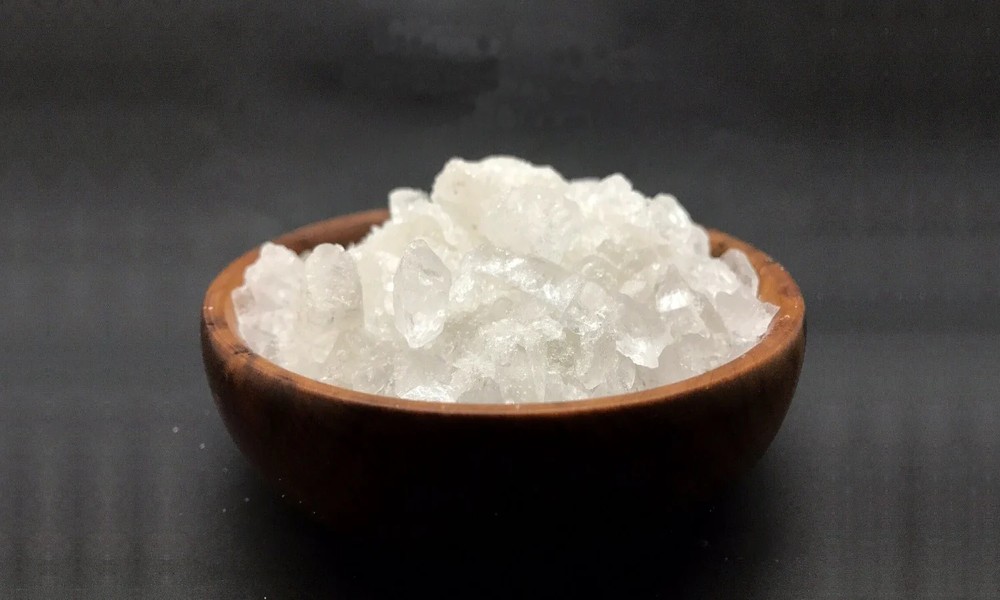
Alum is a compound that many people are familiar with as a water clarifying and sedimentation agent. However, in reality, alum has a much wider range of benefits than most people realize. It is widely used in household applications, businesses, and even large-scale industrial processes. Thanks to its properties in binding impurities, reducing odors, and helping liquids become clearer, alum remains an essential material across many fields.
This article will explore 10 practical benefits of alum that can be applied in real life, along with tips on how to choose the most cost-effective option.
10 Benefits of Alum for Household and Industrial Applications
Alum has been widely used in everyday life for a long time. With its properties that help coagulate sediments, reduce water turbidity, and eliminate unpleasant odors, it can be applied in both household use and industrial production processes. Let’s take a look at 10 practical benefits of alum that can be used in a variety of real-life situations.
1. Helps Clarify Water by Removing Sediments
Alum acts as a coagulant in water treatment processes. When added to water, it neutralizes the charge of fine suspended particles such as clay, silt, and organic matter. These particles then bind together to form larger flocs, which settle more easily at the bottom. This process significantly improves water clarity and is widely used in municipal water treatment systems.
2. Used for Household Cleaning
In household applications, alum can assist in removing tough stains and residues from kitchen tools and surfaces. It works by loosening particles that are strongly attached to surfaces, making them easier to wash away. It is sometimes also used in vegetable washing processes to reduce surface impurities, although it should always be used in controlled and safe amounts.
3. Reduces Unpleasant Odors
Alum helps control odor by reducing microbial activity in organic waste and wastewater. It binds with organic compounds that contribute to foul smells and helps reduce the formation of odor-causing gases such as ammonia and hydrogen sulfide. This makes it useful in wastewater treatment ponds and waste management systems.
4. Preliminary Water Treatment for Drinking Water
In drinking water treatment plants, alum is commonly used in the coagulation stage. It helps remove turbidity, suspended solids, and microscopic impurities before the water undergoes filtration and disinfection. While it improves water clarity, it is not the final purification step and must be followed by proper filtration and sterilization.
5. Speeds Up Industrial Production Processes
In industries such as paper manufacturing, textiles, and chemicals, alum improves process efficiency by accelerating the separation of impurities from raw materials. This reduces settling time and allows filtration systems to operate more effectively, ultimately increasing production speed and consistency.
6. Adjusts Water or Soil Conditions in Certain Areas
Alum is used to stabilize water quality in areas with high turbidity by helping suspended particles settle more quickly. In soil applications, it can improve particle aggregation, reducing soil dispersion and erosion. This makes it useful in agriculture and environmental management, especially in areas with unstable soil or muddy water conditions.
7. Improves Raw Material Conditions
During industrial processing, alum helps condition raw materials by enhancing the aggregation of suspended particles. This makes it easier to separate unwanted substances and prepare materials for further refining or manufacturing stages, improving overall product quality and consistency.
8. Helps Dye Adhere to Fabric
In textile dyeing, alum acts as a mordant, which forms a chemical bridge between dye molecules and fabric fibers. This strengthens dye fixation, resulting in more vibrant, durable, and wash-resistant colors. It is especially important in natural dyeing processes using plant-based pigments.
9. Helps Particles in Swimming Pools Clump Together
In swimming pool maintenance, alum helps coagulate fine particles such as dust, algae, and organic debris. These particles form larger clumps that settle at the bottom or are easily captured by filtration systems, resulting in clearer and more hygienic pool water.
10. Reduces impurities and initial residues
Alum helps reduce the initial load of contaminants such as suspended solids, organic matter, and fine debris in water or raw materials. This improves the efficiency of downstream treatment processes by reducing strain on filtration and purification systems, leading to lower operational costs and better overall performance.
Tips for Choosing Alum for Good Value and Quality
– Choose the appropriate grade for the application
For household use, general-grade alum is sufficient for basic purposes. For industrial applications, a high-purity grade should be selected to ensure more efficient and stable performance.
– Check the purity of alum
Good-quality alum should appear clear, free from impurities, and dissolve well in water. This helps improve its effectiveness in coagulation and other applications.
– Select safe and properly sealed packaging
Choose products with tightly sealed packaging to prevent moisture and contamination, as alum easily absorbs moisture, which can reduce its quality over time.
– Compare price and quantity for value
Do not focus only on the lowest price. Instead, consider the cost per kilogram to ensure long-term value and suitability for actual usage needs.
Alum (สารส้ม) is a highly effective tool for improving water quality, working through a process of coagulation to clear turbidity and remove suspended particles. It remains a staple in a wide range of applications, from domestic use to large-scale industrial water treatment. Today, water treatment technology has expanded to offer even more integrated options, where modern filtration systems work alongside traditional methods to provide enhanced convenience and precision for high-standard purification.
Safety Drink is a leading provider of comprehensive water filtration solutions in Thailand, catering to this diverse range of needs. By offering everything from traditional water treatment essentials to advanced Reverse Osmosis (RO) systems and mineral enhancement filters sourced from top global manufacturers, Safety Drink simplifies the water treatment process. This combination of established methods and cutting-edge technology ensures that users achieve superior standards of safety, efficiency, and sustainability in their everyday water usage.