
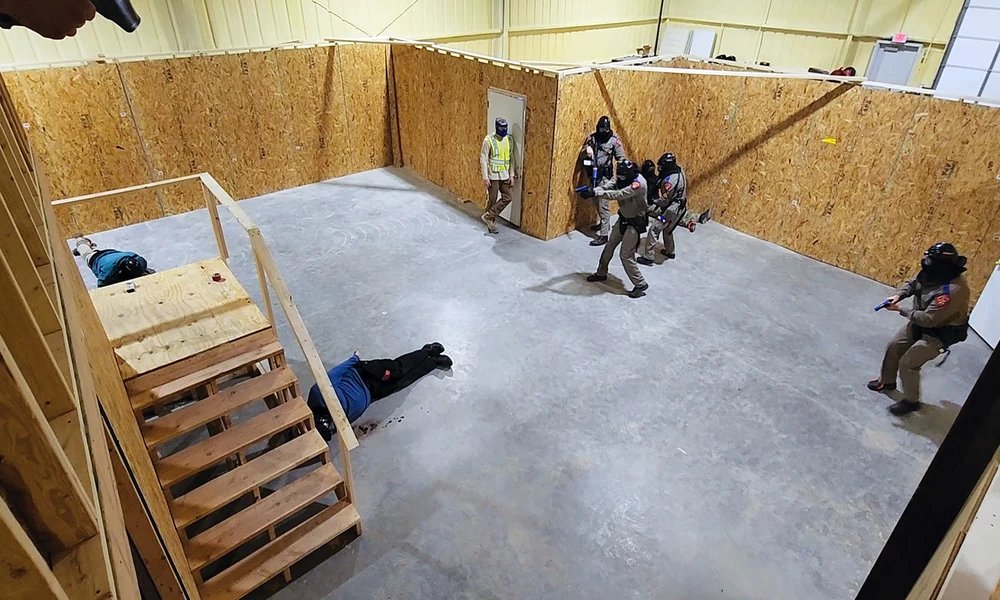
Law enforcement officers are expected to make decisions quickly in situations that may be unpredictable, stressful, and emotionally charged. That is one reason repetition matters in training. A law enforcement virtual reality training system can give officers repeated exposure to realistic scenarios, allowing them to practice communication, observation, judgment, and decision-making without needing to recreate every situation physically.
The aim is not to teach one automatic response to every incident. Real encounters rarely unfold in exactly the same way. Repetition is useful because it gives officers more opportunities to recognize changing conditions, evaluate options, and reflect on how their choices influence what happens next.
Practice Helps Build Familiarity
A scenario can feel very different when an officer has never encountered anything similar before. Even when procedures are understood in theory, applying them under pressure can be more difficult.
Repeated scenario training helps bridge that gap. Officers can practice situations involving distressed individuals, traffic stops, domestic incidents, public disturbances, or other challenging encounters in a controlled setting.
Over time, the environment becomes less unfamiliar. That allows more attention to be placed on the details of the situation rather than simply reacting to the stress of encountering something new.
The Same Situation Can Have Different Outcomes
One of the strengths of scenario-based training is that instructors can vary how events develop.
An officer might initially encounter someone who appears uncooperative but responds positively to calm communication. A similar scenario could involve different behavior, information, or environmental factors that require another approach.
This prevents repetition from becoming memorization.
Instead, officers learn to look for relevant cues and adjust their decisions accordingly. The goal is to practice thinking through a situation rather than simply learning which action follows a particular prompt.
Repetition Makes Debriefing More Useful
The discussion after a scenario is often as valuable as the exercise itself.
An instructor can ask what the officer noticed, why a certain decision was made, and what other options were considered. If an important cue was missed, the officer may then be able to repeat the scenario or work through a similar one with that feedback in mind.
This creates a practical learning cycle: experience the situation, review the response, apply the feedback, and try again.
That process can be particularly effective for communication and de-escalation skills because small changes in tone, timing, or positioning may influence how an encounter develops.
Repeated Practice Can Reveal Patterns
A single scenario provides limited information about performance. Several scenarios can reveal patterns.
An officer may consistently communicate well but overlook certain environmental details. Another may recognize risks quickly but need more practice slowing down decisions when circumstances allow.
Identifying those patterns can make future training more focused.
The same applies at department level. If several officers struggle with similar elements of a scenario, instructors may decide that the issue deserves wider attention.
Training can then respond to observed needs rather than relying entirely on a fixed schedule.
Consistency Matters Too
Departments need officers to understand common expectations, policies, and principles even though individual decisions may vary according to circumstances.
Scenario systems can help by allowing multiple officers to experience comparable situations. Instructors can then discuss the same themes across different training sessions and reinforce consistent standards.
This can be useful when policies change or when a department wants to focus on a particular subject such as communication, de-escalation, or decision-making under pressure.
Repeated scenarios give officers opportunities to apply those expectations rather than only hearing about them in a classroom.
Repetition Should Still Be Varied
Training loses value if officers know exactly what will happen every time.
If every scenario develops predictably, participants may begin reacting to the exercise rather than evaluating the situation realistically.
Variety is therefore essential. Scenarios should include different environments, behaviors, outcomes, and levels of risk. Some situations may resolve through communication, while others may require a different response.
The purpose is to reinforce the process of observing, assessing, and deciding.
A well-designed program uses repetition to strengthen those skills without making the situations themselves repetitive.
Turning Experience Into Better Judgment
Officers cannot realistically encounter every possible situation during routine duties before they are expected to respond effectively. Training helps fill some of that experience gap.
Repeated scenarios allow officers to make decisions, see consequences, receive feedback, and reconsider their approach in a controlled environment. That experience cannot reproduce every aspect of a real incident, but it can provide more opportunities to practice the thinking that difficult situations require.
The value of repetition is therefore not simply doing the same exercise again and again. It is creating repeated opportunities to observe, decide, review, and improve. When scenarios remain varied and debriefing is taken seriously, repetition can help turn isolated training exercises into a more continuous process of developing judgment.