
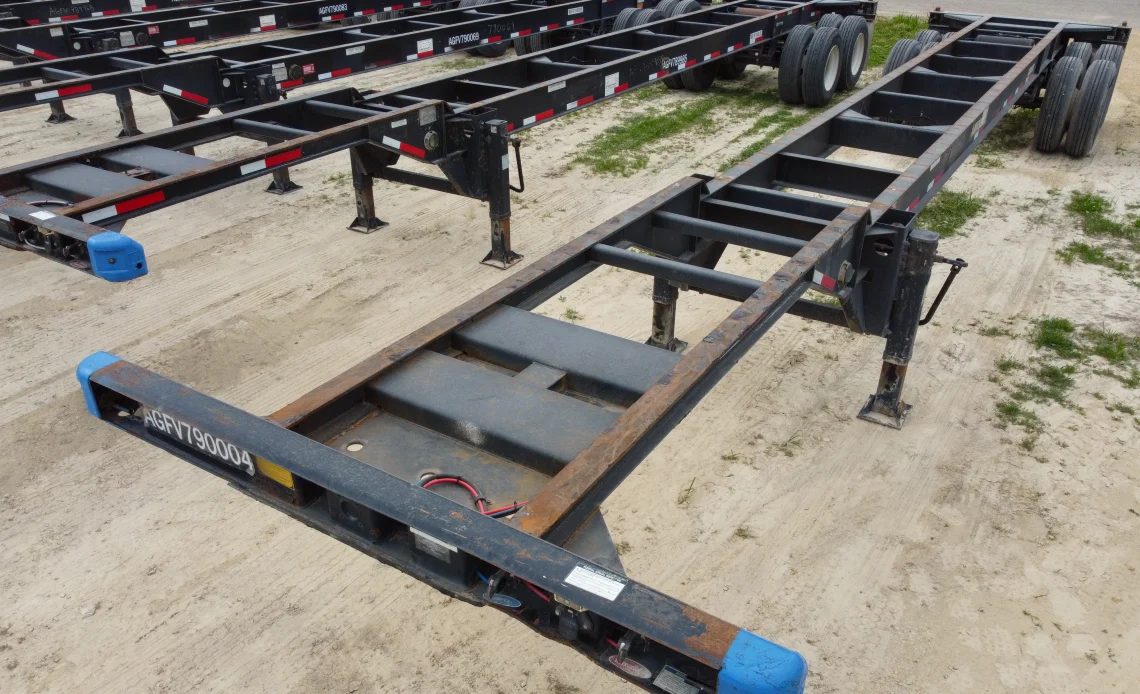
Selecting the right container chassis size affects transport efficiency, safety, and operating costs. A well-matched chassis supports stable cargo handling and smooth logistics operations across different transport modes.
Below are the practical considerations that help logistics teams select the most suitable chassis size for their operations:
Container Dimensions and Cargo Requirements
Container size determines the chassis length and axle configuration. Standard containers include 20-foot, 40-foot, and 45-foot units. Oversized or heavy loads may require extendable or reinforced chassis models, including tri-axle chassis, which provide better weight distribution and higher load capacity. Weight distribution must align with axle ratings to prevent structural stress and regulatory issues.
Aside from that, cargo type influences size selection. Refrigerated containers, high-cube units, and specialized cargo may need additional clearance or structural support to maintain stability and safety during transport.
Regulatory and Legal Compliance
Local and international regulations affect allowable container chassis dimensions, axle loads, and overall vehicle length. Transport companies must review road laws and port requirements before choosing a chassis size. Non-compliance can lead to penalties, route restrictions, and operational delays.
Permitted weight limits vary by region, so a properly sized chassis helps maintain compliance while maximizing payload capacity.
Operational Environment and Route Conditions
Road conditions and route types impact chassis size decisions. Shorter chassis units offer better maneuverability in urban areas and congested terminals, while longer chassis units enhance efficiency for long-haul highway transport.
Port facilities and yard layouts also matter. Some terminals have space constraints that favor compact configurations. Evaluating turning radius and docking requirements helps reduce handling issues.
Compatibility With Transport Equipment
Chassis size must be compatible with tractors, cranes, and loading equipment. Incorrect sizing can cause coupling problems or inefficient loading processes. Intermodal container trailers often require standardized chassis dimensions to support seamless transfers between trucks, trains, and ships.
Future Scalability and Fleet Strategy
Fleet planning should account for changing container trends and customer needs. Investing in versatile sizes allows companies to adapt without frequent replacements. Modular or extendable designs offer flexibility for diverse shipping demands.
A well-chosen container chassis trailer supports reliable transport operations and long-term cost control while meeting safety and regulatory standards.