
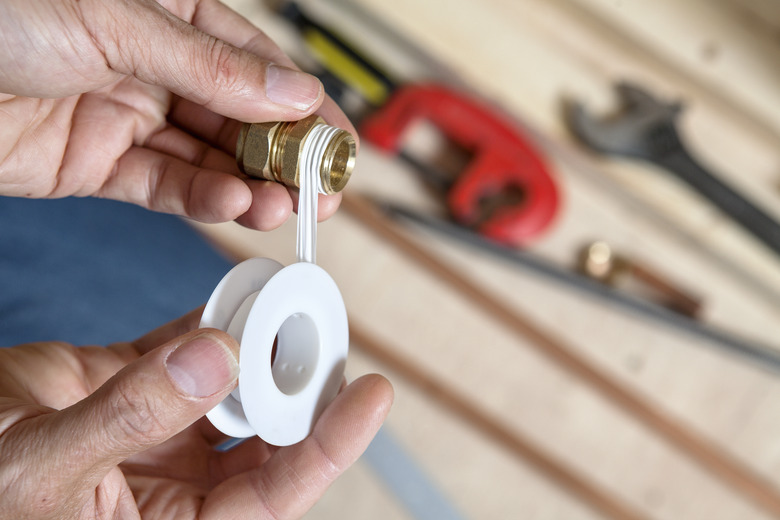
Teflon tape winds its way through the hidden infrastructure of our homes like an unsung sentinel, preventing the chaos of water damage with nothing more than its thin, white presence. This humble material—officially known as polytetrafluoroethylene (PTFE) tape—performs its duty without recognition, creating watertight seals in the threaded joints that connect our most essential services. For something so vital to maintaining order in our domestic lives, it remains largely invisible, noticed only in its absence when pipes begin to weep and walls begin to stain.
The Invisible Membrane Between Order and Chaos
In the cramped spaces beneath sinks and behind walls, Teflon tape creates an almost imperceptible barrier between functioning plumbing and potential disaster. Applied properly, it transforms vulnerable threaded connections into watertight systems capable of withstanding years of pressure fluctuations and temperature changes.
Not Just Plumbing: The Versatility of PTFE
While most people associate Teflon tape exclusively with plumbing, its applications extend far beyond our water systems:
- Gas line connections: Yellow-coded PTFE tapes are specifically formulated for sealing connections in gas pipes
- Oxygen systems: Green-coded tapes are manufactured without oils to prevent fire hazards in pure oxygen environments
- Stainless steel applications: Gray tapes contain nickel to prevent galvanic corrosion between dissimilar metals
- High-pressure industrial systems: Pink or red tapes provide extra density for demanding applications
- Electronics manufacturing: Higher-grade PTFE tapes serve as insulation in sensitive electronic components
Each colour and formulation represents a carefully designed solution to a specific problem, applied by specialists who understand that the wrong tape in the wrong place could lead to catastrophic failures.
The Material Science Behind the Magic
The properties of Teflon tape derive from the unusual structure of its constituent polymer:
- Extremely hydrophobic—literally “water-fearing”
- Chemical inertness resistant to most solvents
- Very low coefficient of friction
- Ability to deform under pressure
These properties emerge from the carbon-fluorine bonds that make up the material—some of the strongest single bonds in organic chemistry.
The Unexpected Discovery
Like many revolutionary materials, PTFE emerged not from targeted research but as an accidental discovery. In 1938, a young chemist named Roy Plunkett was working on refrigerants at DuPont when he checked a storage cylinder and found it had mysteriously transformed from gas to a waxy, white solid. Rather than discarding this unexpected result, Plunkett investigated its properties, uncovering one of the most versatile polymers ever developed.
Singapore’s Teflon Tape Industry
Singapore has developed a significant presence in the PTFE tape market, with several manufacturers establishing operations to serve both local and international markets. The city-state’s strategic position as a trading hub has made it an ideal location for distributing these essential materials throughout Southeast Asia.
“Some of the products containing Teflon that we export are PTFE Teflon Tape and PTFE Teflon Film. They are commonly used in electronic repair and manufacturing applications due to their low friction nature.”
The high standards of Singapore’s manufacturing sector ensure that products meet or exceed international specifications, particularly important for applications where failure could result in significant damage or safety hazards. Companies like HELEFLO Products, established in 1985, have become leading suppliers of high-quality PTFE tapes in the region, serving industries ranging from plumbing to aerospace.
The Environmental Question
Despite its utility, Teflon tape exists within a complex environmental context:
- PTFE is extremely durable, which means it performs reliably for decades but also resists natural decomposition
- Its production historically involved perfluorooctanoic acid (PFOA), a persistent environmental contaminant
- While modern manufacturing has largely eliminated PFOA, the environmental persistence of fluoropolymers remains a concern
- The small quantities used in typical applications minimise its overall environmental footprint
Proper Application: A Skill Worth Mastering
For homeowners and DIY enthusiasts, learning to properly apply Teflon tape represents one of the most accessible and useful plumbing skills:
- Clean the threads thoroughly
- Hold the tape parallel to the first thread
- Wrap in a clockwise direction
- Maintain tension while wrapping
- Overlap by approximately 50% with each turn
- Use 3-4 wraps for water applications
The Unexpected Cultural Significance
Beyond its practical applications, Teflon tape has acquired a subtle cultural significance. It represents a kind of practical knowledge that was once common but has become increasingly specialised in our service-oriented economy. The ability to properly apply this material connects modern DIY enthusiasts with generations of plumbers, steamfitters, and other tradespeople who have relied on this simple technology.
There’s something deeply satisfying about mastering this small skill—about knowing exactly how many wraps to apply, how much tension to maintain, and which direction to wrap. It represents a form of physical knowledge that can’t be fully conveyed through text but must be learned through practice and embodied experience.
Beyond the Hardware Store
The next time you visit a hardware store and notice spools of Teflon tape hanging in the plumbing section, consider the remarkable material science, manufacturing expertise, and practical tradition represented in these simple rolls. Consider, too, the global supply chains that deliver this specific material to wherever water systems need maintenance.
From its accidental discovery in a New Jersey laboratory to its production in sophisticated manufacturing facilities in Singapore and elsewhere, Teflon tape represents the culmination of global expertise channelled into a simple, effective solution to a common problem. It reminds us that even the most mundane materials can embody remarkable human ingenuity and that sometimes, the most important technologies are the ones we barely notice—until they’re absent.
In our complex world of digital technologies and artificial intelligence, there remains profound value in understanding and mastering simple physical materials like Teflon tape. These materials form the literal connections that maintain our modern infrastructure, preventing disorder through their quiet, continuous presence.